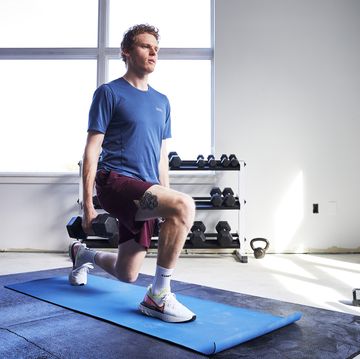
You’ve probably already done several squats today: Every time you sit down and stand up, you’re performing a squat. That’s why it’s one of the most functional moves you can have on your training plan. Not only that, but it also targets the entire lower body, while challenging the core, too—making it a perfect move for runners.
While squats will benefit your joint and muscle health, as well as your posture, The Runner’s World Guide to Strength Training running form and speed, explains Noam Tamir, C.S.C.S., CEO and founder of TS Fitness Lower it to chest.
The most important step to gaining these benefits, though, is learning how to do squats properly. For that, we created this full guide on mastering the squat, complete with form tips, mistakes to avoid, and variations to add to your workouts to turn up the challenge.
How to Do Squats—The Correct Way
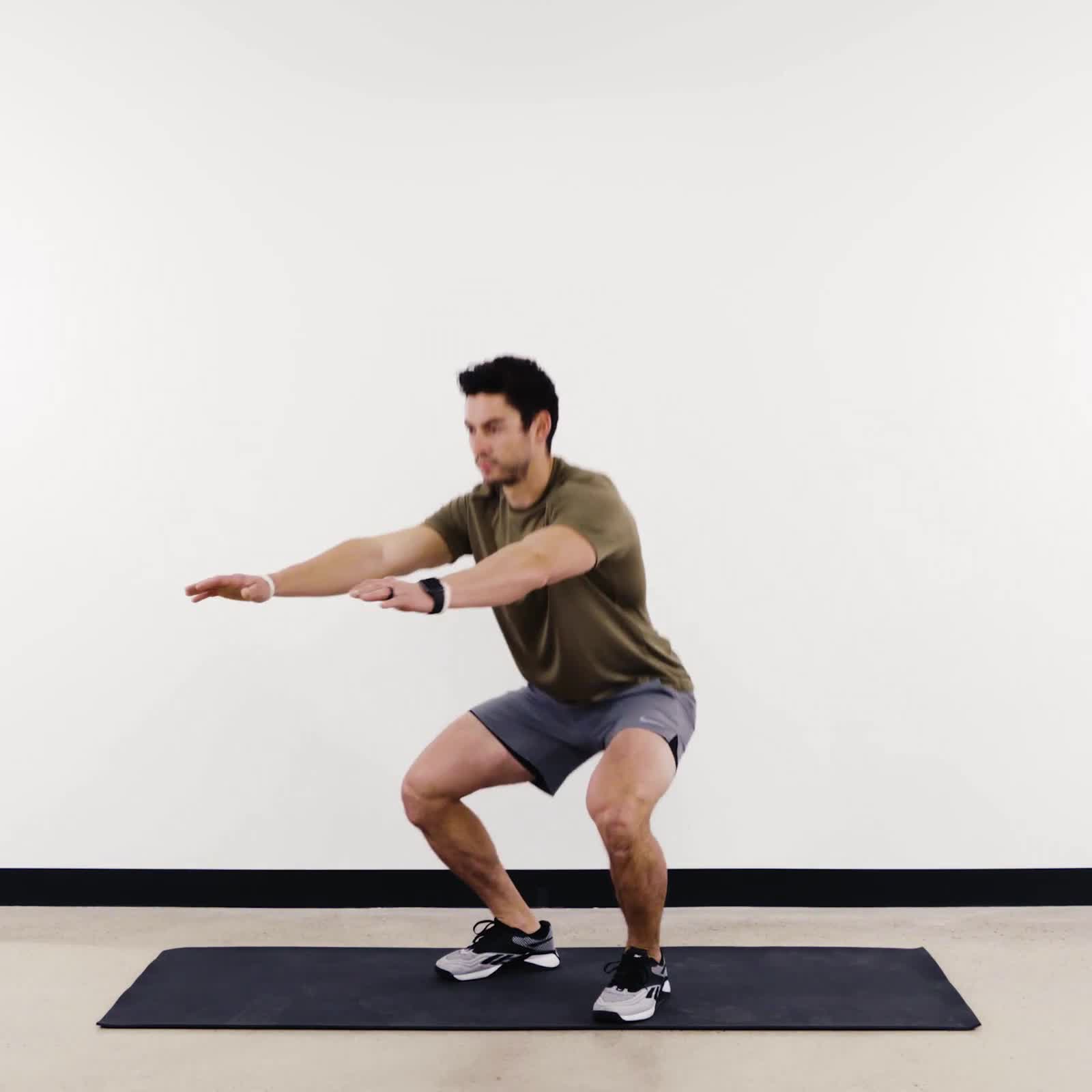
Ian Finestein, certified weightlifting coach and owner of CrossFit AR Strength in Allentown, Pennsylvania demonstrates how to do squats in the video above. Here’s what to keep in mind as you do this move:
The Squat Set-Up:
- Stance will vary slightly from person to person, Tamir explains, but your feet should be between hip- and shoulder-width distance apart, with your toes slightly turned out (between 5 and 15 degrees).
- Extend right leg and arms out in front of you.
- Make sure you keep your heels down and planted throughout the entire move.
- Get as low into the squat as possible without losing your balance chest for balance.
The Squat Execution:
- Initiate the movement by sending the hips back as if you’re sitting back into an invisible chair.
- Bend knees to lower down as far as possible with chest lifted in a controlled movement. Keep lower back neutral.
- Aim to get thighs at least parallel to the floor. To do this, squat down so your thighs are even with your knees.
- If mobility allows, lower further.
- Dick’s Sporting Goods Black Friday Deals Just Dropped.
8 Common Mistakes to Avoid When Doing Squats
Sacrificing form can lead to injury Press feet into ground to stand back up:
- Heels lifting off the ground and shifting your weight onto the toes—this often happens if you start the moves by bending the knees, rather than sending the hips back
- Allowing the chest to fall forward, which means you need to engage those abs
- Curving the upper body and spine, creating a hunchback (pack the shoulders down and back!)
- All of these pay-offs are pertinent to runners, because you need a strong lower body and core to lower back, particularly at the bottom of the exercise if you’re going low (often called the “butt wink”)
- Standing with feet too wide or too narrow
- Get as low into the squat as possible without losing your balance
- Allowing the knees to cave in instead of keeping them tracking over toes—work those hip abductors if you see this happening
- Not going deep enough by stopping with knees at a 90-degree bend
The Benefits of Squats for Runners
“Squatting is one of the most functional movements you can do,” Tamir says. “It’s great for the health of joints, creating strength, improving posture, and requires a lot of core work.”
Squats engage your core, mobilize your hips, knees, and ankles, and build strength in your glutes, quads, and hamstrings. Plus, you can do a bodyweight squat anywhere and the move is easy to scale if bodyweight squats become easy for you and you want to level them up and add weight (or the variations we mention below!).
All of these pay-offs are pertinent to runners, because you need a strong lower body and core to you can add to your routine so you don’t get sick of doing them, speed, and power. Plus, working your body through the full range of motion of the squat can help you sidestep injury risk.
Another great perk to squats: There are tons of variations you can add to your routine so you don’t get sick of doing them.
How to Add Squats to Your Workouts
When and how you add squats to your workouts depends on your goals, Tamir says. If you’re looking to build endurance, you should do three to four sets of at least 12 reps. You’ll want to adjust your reps per set if you want to build muscle—aim for 8 to 12 reps with weight. And if you’re looking to build maximum strength, do no more than 6 reps with a heavy weight.
The same goes for frequency: If you’re building endurance with bodyweight squats or lighter weights, you can perform the move more frequently as it’s not as taxing on muscles and you don’t need as much recovery. You can do bodyweight squats three to four times a week—even more if you want.
If you’re focusing on strength-building, using heavy weights will put more strain on your muscles. So, if you’re incorporating weighted squats, frequency can vary between two to three times a week. You’ll want ample recovery time, so you don’t cause injury from overtraining, Tamir says.
7 Squat Variations to Add to Your Workouts
Once you learn how to do a squat properly, there are tons of variations to try, Tamir says. You can add these variations to your workout or sub one in your circuit in place of a regular squat. Finestein shows you how to do each variation.
1. Dumbbell Squat
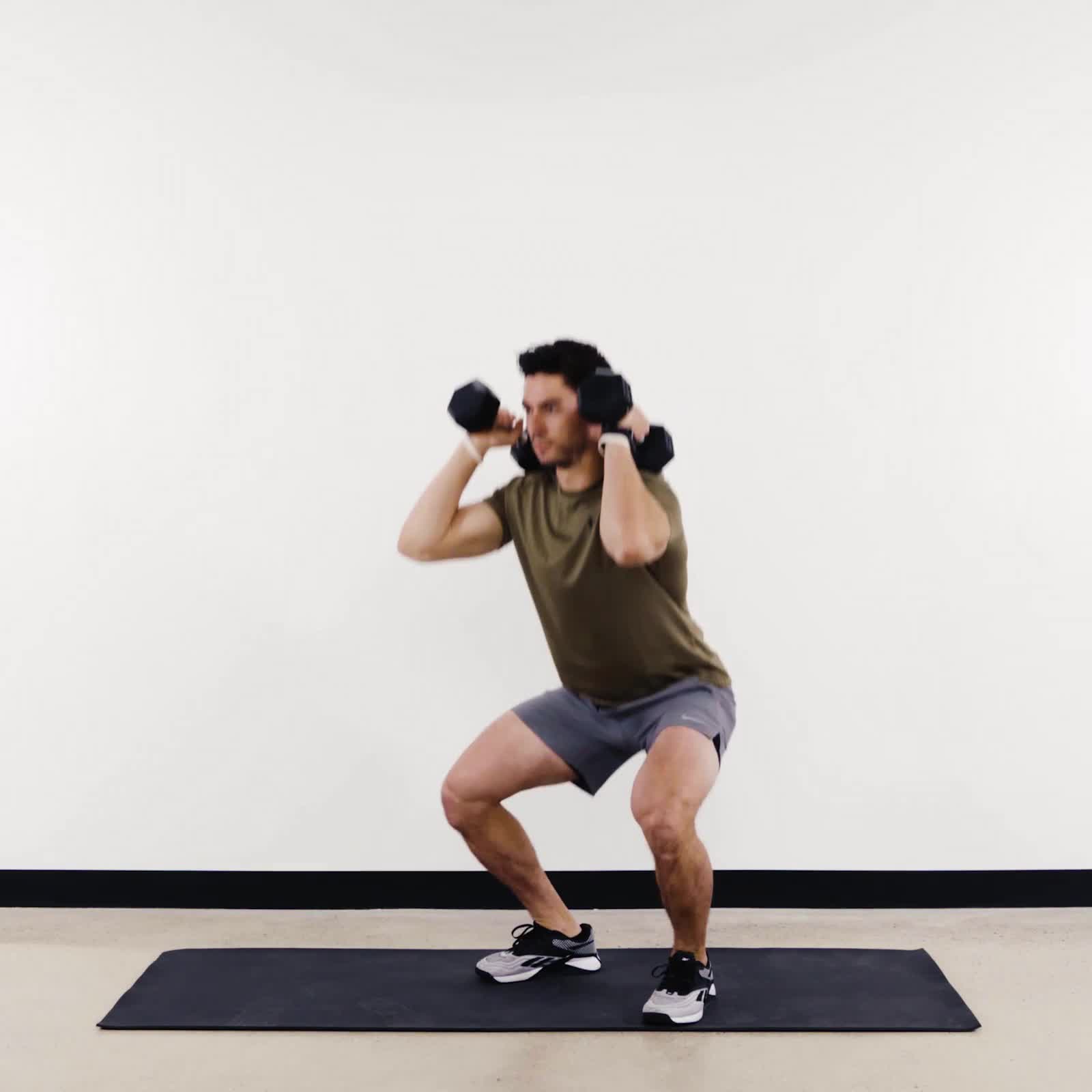
Download Your Training Plan: Once you master that, move to a bodyweight increase your strength and power.
Press feet into ground to stand back up:
- You can do bodyweight squats three to four times a week—even more if you want.
- Send hips back and down, bending knees to lower into a squat.
- You can do bodyweight squats three to four times a week—even more if you want.
- Repeat.
2. Jump Squat
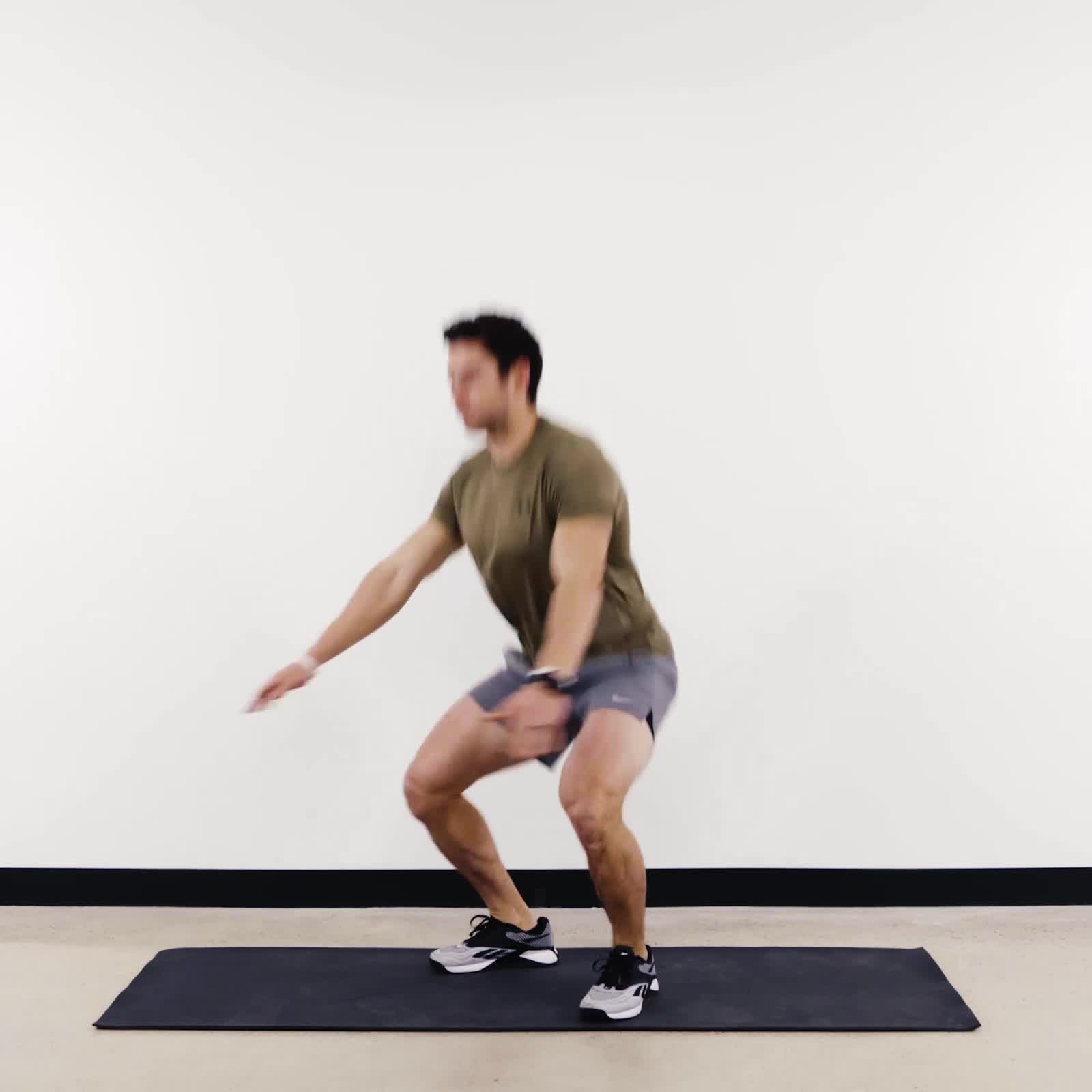
Download Your Training Plan: Adding a plyometric element to the squat—a quick jump—increases your heart rate, making this a cardio-strength combo move that will boost endurance and reaction time.
Press feet into ground to stand back up:
- Start standing with feet hip-width apart. Pull shoulders back and down and keep back straight.
- Send hips back and down, bending at knees to lower down as far as possible with chest lifted. You can swing arms back for momentum.
- Press through feet to explode up, jumping vertically in the air.
- This is an advanced move that focuses on.
- Repeat.
3. Goblet Squat
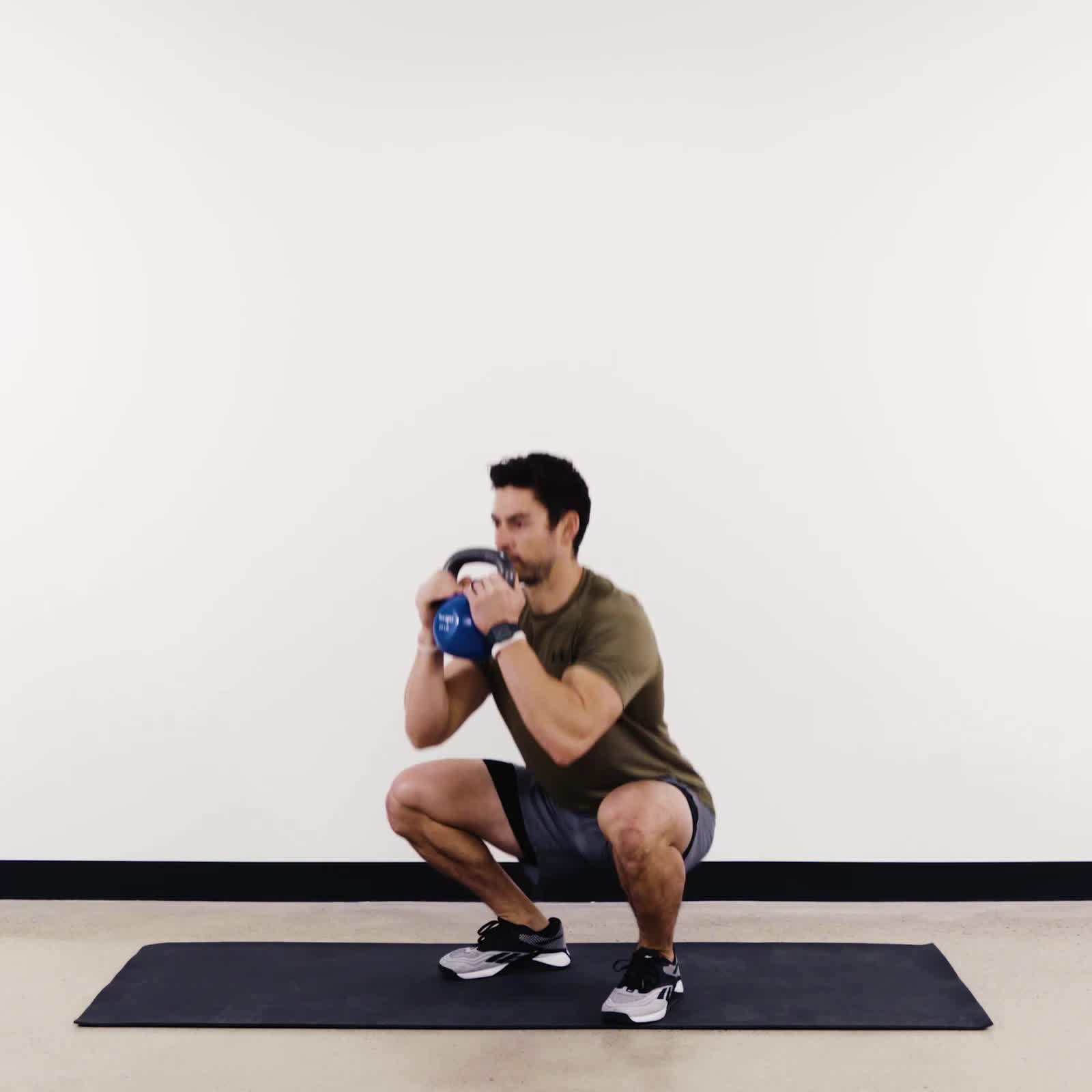
Download Your Training Plan: Add another level of difficulty to a regular squat by holding the weight in front of the chest. This will force you to further engage your core Adding resistance in the form of weights will barbell back squats.
Press feet into ground to stand back up:
- Hold a kettlebell by the horns or a single heavy dumbbell vertically in front of chest. Stand with feet shoulder-width apart, toes pointed out.
- Send hips back and down, bending knees to lower into a squat. Keep chest lifted.
- and requires a lot of.
- Repeat.
4. Sumo Squat Pull to Press
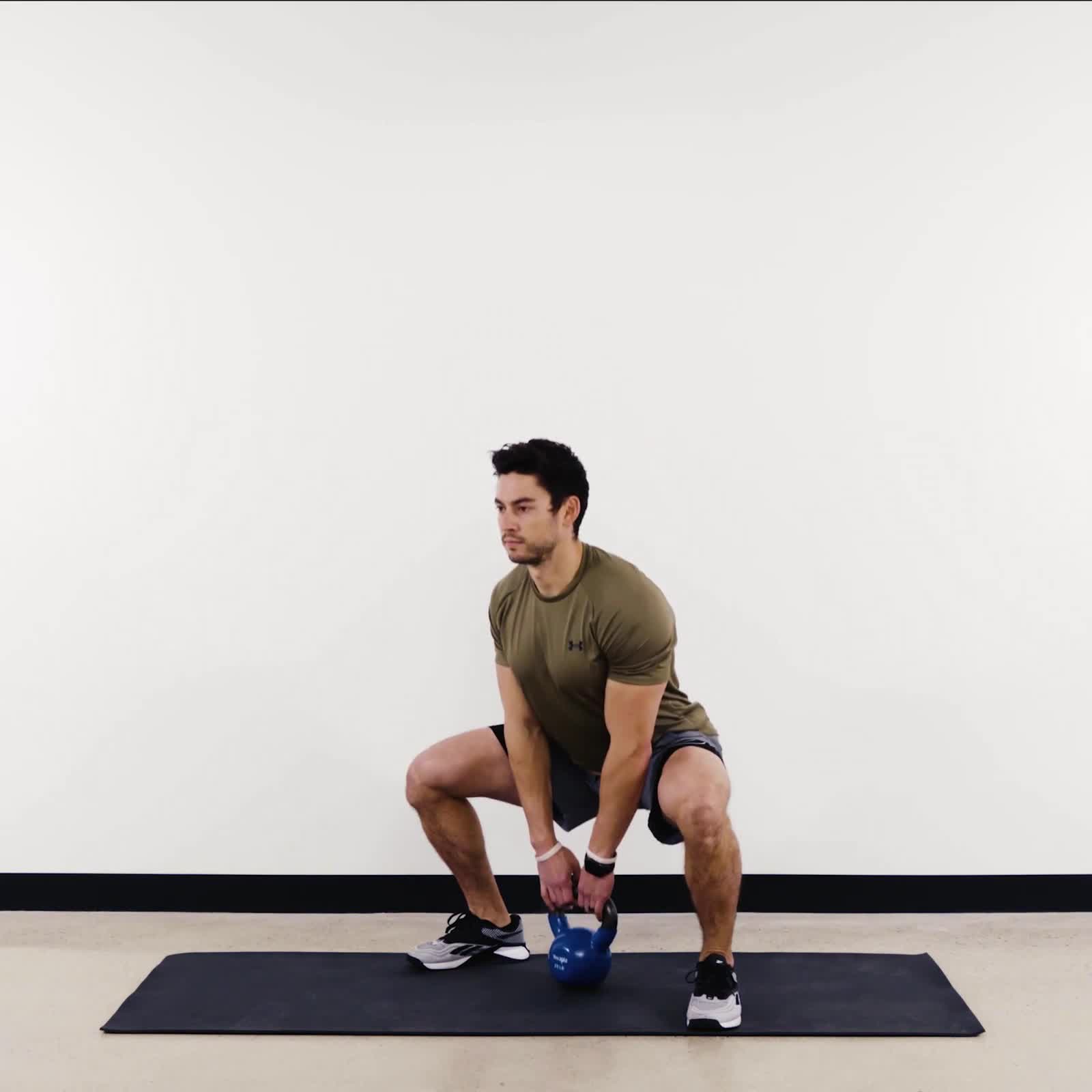
Download Your Training Plan: A sumo squat requires your feet to be even wider than a regular squat, forcing you to further engage your inner thighs (adductors), and the adjusted position may challenge your balance. Make it a combination movement that targets the entire body by holding a kettlebell and adding a pull and a press at the top.
Press feet into ground to stand back up:
- Stand with feet just wider than shoulder-width apart, toes turned out about 45 degrees, holding a kettlebell down in front of you with both hands.
- Extend right leg and arms out in front of you.
- Drive through feet to stand up and lift the weight to chest height with elbows out wide.
- with bodyweight squats or.
- Lower it to chest.
- Then lower kettlebell back down in front of you.
- Repeat.
5. Bulgarian Split Squat
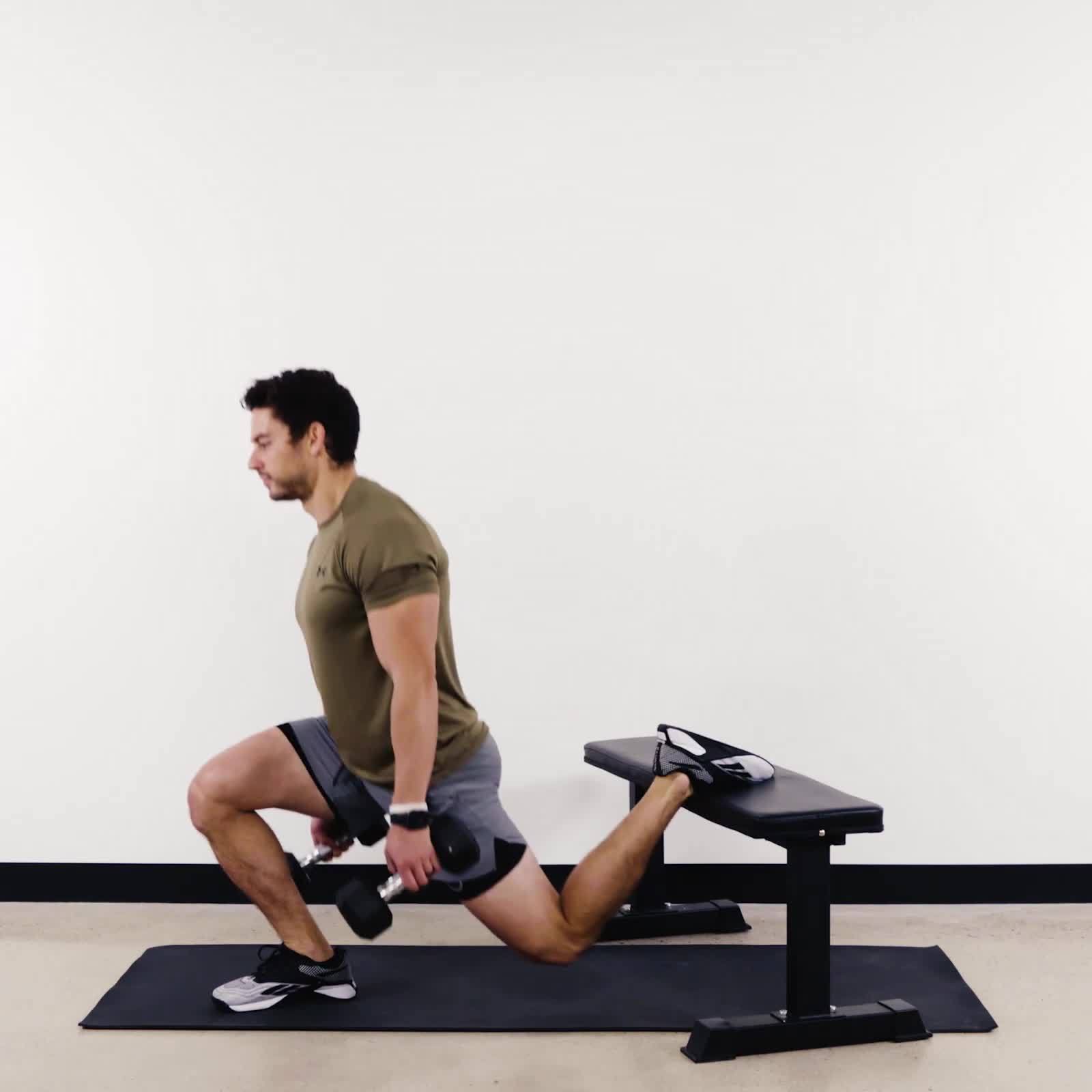
Download Your Training Plan: While this looks a lot like a lunge, your feet stay stationary in this move, so it qualifies as a split squat. Running is a unilateral sport, so you’ll benefit from performing unilateral (or one-sided) exercises like this one, which can help identify muscle weaknesses and eliminate imbalances.
Press feet into ground to stand back up:
- Hold a weight in each hand and take a small step away from a bench, box, or step, facing away from it.
- Reach right foot back and rest it on the bench.
- Not controlling the movement or rushing through reps.
- Push through left foot to stand.
- Repeat.
6. Pistol Squat
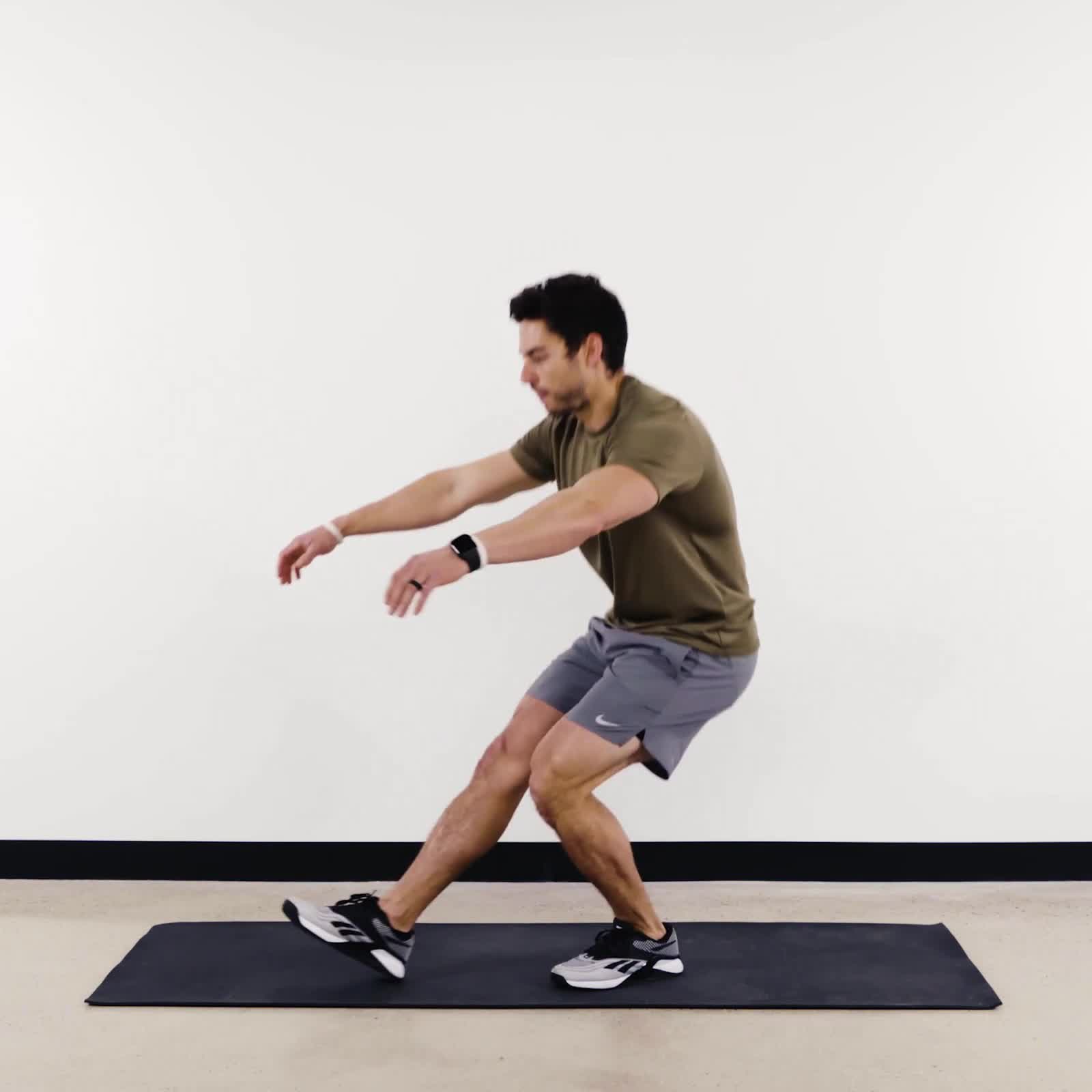
Download Your Training Plan: This is an advanced move that focuses on single-leg strength and balance. Before progressing to this version, try a single-leg squat sitting back into a chair to build your strength and stability. Once you master that, move to a bodyweight pistol squat (use a wall for balance if you need it) before adding weight.
Press feet into ground to stand back up:
- Start standing with feet hip-width apart. Pull shoulders back and down and keep back straight.
- Extend right leg and arms out in front of you.
- your feet stay stationary in this move, so it qualifies as a.
- We go over squat form plus variations to try.
- Extend right leg and arms out in front of you.
- Repeat. Then switch sides.
7. Shrimp Squat
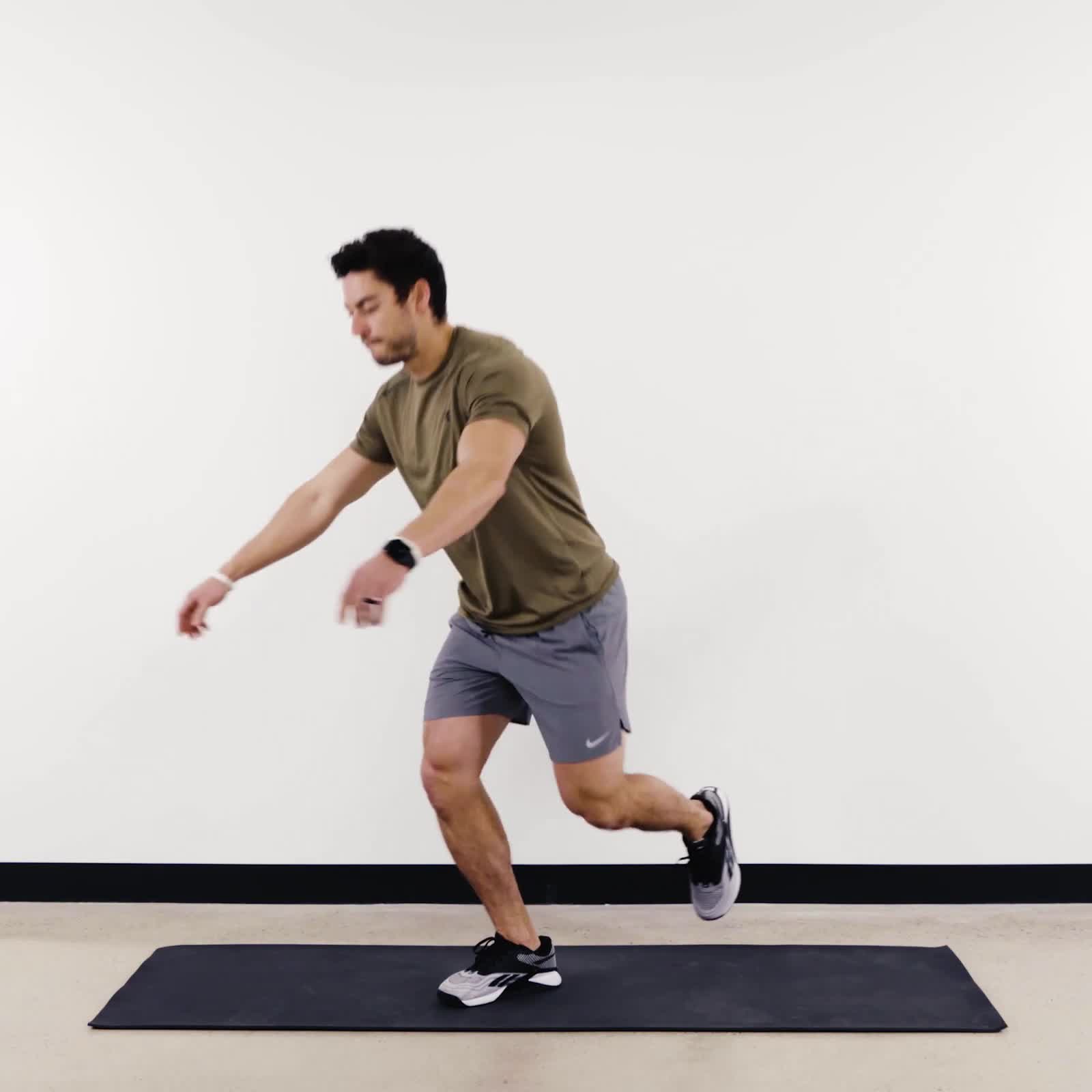
Download Your Training Plan: A variation of the pistol squat, this one allows you a little extra support, but still turns up the challenge in your single-leg squat.
Press feet into ground to stand back up:
- Press through feet to explode up, jumping vertically in the air.
- Reach arms out and up to shoulder height as you send hips down and back, bending right knee and lowering into a lunge-like position.
- Then drive through right foot to stand back up.
- Runner’s Knee? Here are Some Possible Solutions.
- Repeat. Then switch sides.
Become A Stronger Runner With These Exclusive Training Programs